
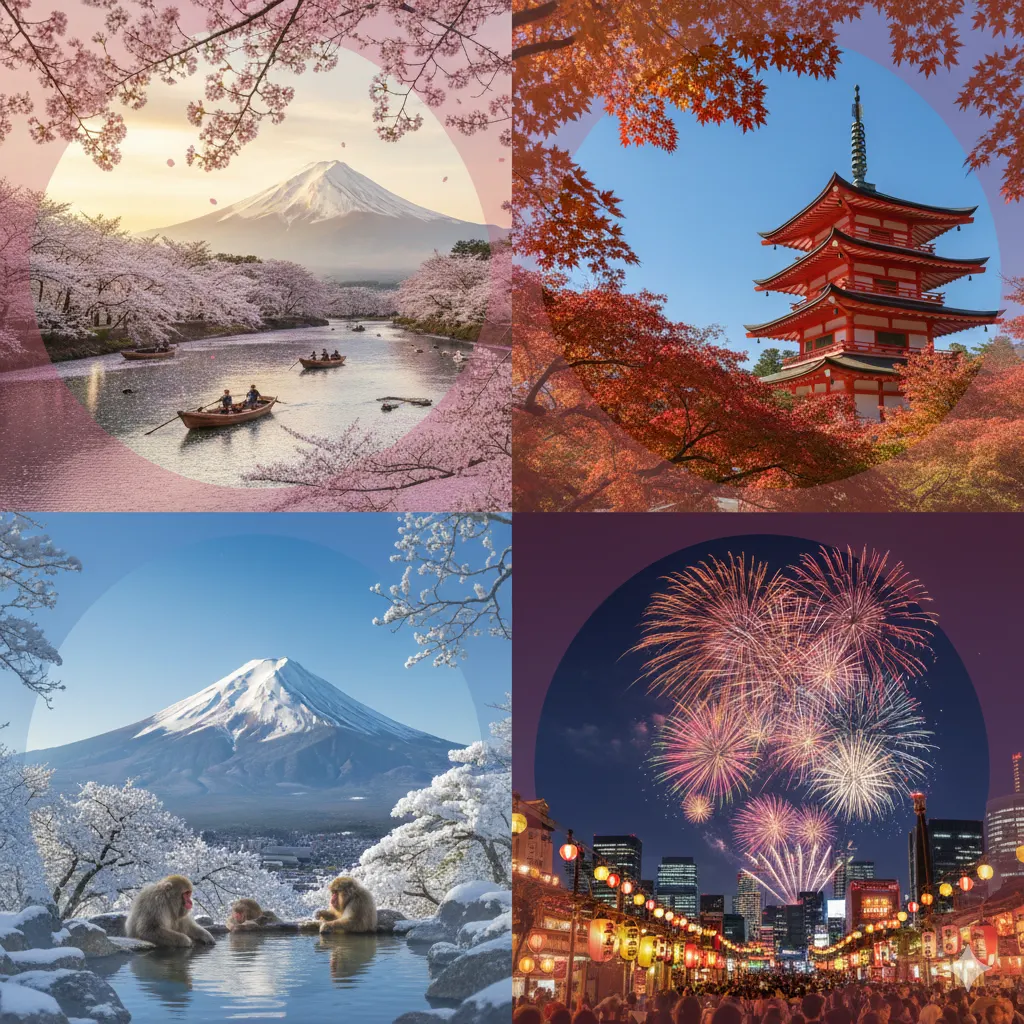
Deciding on the best time to visit Japan can be a challenging but rewarding task. The country offers four distinct and beautiful seasons, each presenting a unique set of travel experiences, climate conditions, and price points. From the iconic cherry blossoms of spring to the dazzling autumn foliage and the world-class ski slopes of winter, the ideal month to plan your trip depends entirely on your travel priorities: weather, crowds, cost, or a specific cultural event.
Generally, the consensus among travelers is that the Spring (March to May) and Autumn (September to November) offer the most pleasant weather and spectacular natural beauty, making them the most popular, albeit most crowded, times to go.
🌺 Peak Season: Spring (March – May)
Spring is arguably the most famous and sought-after time to visit, centered around the spectacular blooming of the Sakura (cherry blossoms).
The Magic of the Cherry Blossoms (Sakura)
- Best Time: Late March to early April is the prime viewing time for major cities like Tokyo, Kyoto, and Osaka. The bloom progresses like a wave, starting in the south (Kyushu) in March and ending in the north (Hokkaido) in May
- What to Expect: The mild, pleasant temperatures are perfect for outdoor activities like picnics under the trees (Hanami) and exploring temples and gardens
- Crowds & Cost: Expect the highest prices and the largest crowds of the year. Hotels can surge by 50% to 100% in popular cities during peak bloom
- Crucial Planning Note: Avoid Golden Week (late April to early May), a cluster of four national holidays, which sees massive domestic travel, leading to booked-out transportation and skyrocketing accommodation costs
Spring Highlights:
- Festivals: Kanda Matsuri (Tokyo) and Sanja Matsuri (Tokyo) in May, and the Takayama Spring Festival
- Climate: Mild and dry, with average high temperatures ranging from $15^{\circ}\text{C}$ to $20^{\circ}\text{C}$
🍁 Peak Season: Autumn (September – November)
Autumn is the second most popular season, offering a stunning display of Koyo (fall foliage) and beautifully cool, dry weather.
The Radiance of Fall Foliage (Koyo)
- Best Time: The Koyo front moves from north to south, starting in Hokkaido in late September and peaking in cities like Kyoto and Tokyo from mid-November to early December
- What to Expect: Like spring, the weather is refreshingly crisp, dry, and mild, making it ideal for walking, hiking, and sightseeing . The transformation of maple and ginkgo trees is breathtaking.
- Crowds & Cost: Prices are high and tourist spots are crowded, though generally slightly less intense than the spring Sakura season .
- Crucial Planning Note: September can still see the tail end of the typhoon season, especially in the south, though the weather often clears by October.
Autumn Highlights:
- Festivals: Nagasaki Kunchi Festival (October) and the Jidai Matsuri in Kyoto (October 22nd), featuring historical costume parades
- Climate: Temperate weather, ranging from mild days to cool nights, with minimal rainfall
☀️ Shoulder/Low Season: Summer (June – August)
Summer offers lively festivals but is characterized by high heat and humidity.
Dealing with the Humidity and Rainy Season
- Best Time: Late July and August, after the main rainy season, is best for dry heat.
- The Rainy Season (Tsuyu): June is typically the wettest month, especially in Honshu and Kyushu, with persistent drizzle and heavy humidity While not torrential, the humidity can make sightseeing uncomfortable.
- What to Expect: High temperatures, often reaching above $30^{\circ}\text{C}$, coupled with intense humidity. This is the best time for hiking Mount Fuji, which is only officially open from early July to early September. Many locals head to the beaches of the Okinawa Islands
Summer Highlights:
- Festivals: Summer is the season of the Matsuri (festivals) and spectacular Hanabi Taikai (fireworks).
- The Gion Matsuri in Kyoto (July) and the Nebuta Festival in Aomori (August) are massive cultural events
- Crowds & Cost: Generally, a low tourist season due to the weather, which can lead to better deals on accommodation and tours. However, domestic travel peaks around the Obon holiday in mid-August
❄️ Low Season: Winter (December – February)
Winter is the most budget-friendly time to visit, offering clear skies, incredible snow sports, and unique cultural experiences.
Snow, Onsen, and Clear Vistas
- Best Time: January and February are best for skiing and snowboarding in Hokkaido and the Japanese Alps, which offer some of the best powder snow in the world
- What to Expect: Cold, but often dry and sunny weather in the southern regions. The air is crisp, providing incredibly clear views of landmarks like Mount Fuji. Soaking in a traditional onsen (hot spring) while surrounded by snow is a quintessential Japanese experience.
- Crowds & Cost: The period between New Year’s and the start of the spring rush is the quietest and cheapest time to travel, offering significant savings on flights and accommodation.
- Crucial Planning Note: Ryokan (traditional inns) in some regions may be very cold due to limited central heating.
Winter Highlights:
- Festivals: The world-famous Sapporo Snow Festival (February) in Hokkaido, featuring massive snow sculptures, and the Yokote Kamakura Snow Festival (February) in Akita
- Cultural Experience: Celebrating O-Shogatsu (New Year) with the traditional Hatsumode (first shrine visit)
💰 Japan Travel Cost: Budget by Season
The cost of your trip is heavily influenced by the season and the resulting demand for flights and hotels.21
| Season | Months | Average Daily Budget (Mid-Range) | Primary Cost Driver | Crowd Level |
| Peak (Most Expensive) | Late March – Early May, Oct – Nov | $150 – $300+ USD | Accommodation, Flights | Very High |
| Shoulder (Moderate) | May, September, Early June | $120 – $200 USD | Tours/Activities | High |
| Low (Best Value) | Dec – Feb, Late June – Mid-July | $100 – $150 USD | Transportation (JR Pass) | Low |
- Note: These estimates cover daily expenses (excluding major intercontinental flights/passes). A mid-range 7-day trip for an individual might cost between $1,500 and $2,500 USD
- Saving Tip: Consider traveling in May, right after the cherry blossom crowds and Golden Week subside. The weather is warm, and hotel prices drop significantly, offering a great balance of weather and value .
📅 Best Time for Your Specific Goal
| Your Goal | Best Time to Visit | Top Destinations | Anchor Text Link Suggestion |
| Cherry Blossoms (Sakura) | Late March – Early April | Tokyo, Kyoto, Osaka, Hirosaki (May) | Japan National Tourism Organization |
| Fall Foliage (Koyo) | Mid-November – Early December | Kyoto (Kiyomizudera Temple), Hakone, Tokyo (Rikugien Garden) | How to see Japan’s Autumn Leaves |
| Skiing/Snowboarding | January – February | Hokkaido (Niseko, Rusutsu), Hakuba, Tohoku | Ski Resorts in Japan |
| Budget Travel & Fewer Crowds | January, February, Early December | Anywhere outside of major festivals | Budget Travel Tips for Japan |
| Climbing Mount Fuji | Early July – Early September | Fujiyoshida Trail, Subashiri Trail | Mount Fuji Climbing Season Guide |
| Summer Festivals (Matsuri) | July – August | Kyoto (Gion), Aomori (Nebuta), Tokushima (Awa Odori) | Guide to Japanese Festivals |
💡 Final Verdict: Which Season is Truly the Best?
The best time to visit Japan ultimately aligns with your personal travel style:
- For the Classic Experience (Cherry Blossoms): April (Expect highest cost and biggest crowds).
- For the Scenic Experience (Fall Foliage): October/November (Expect high cost, but clear, comfortable weather).
- For the Best Value and Clear Weather: January (Expect low costs, low crowds, and beautiful winter scenery).
- For the Best Balance (Shoulder Season): Late May or Early September (Lower prices than peak, good weather, and manageable crowds).
No matter when you decide to go, Japan’s efficient public transport system, including the world-famous Shinkansen (bullet train), makes travel between regions smooth, allowing you to chase the blossoms or the fall colors across the country.