
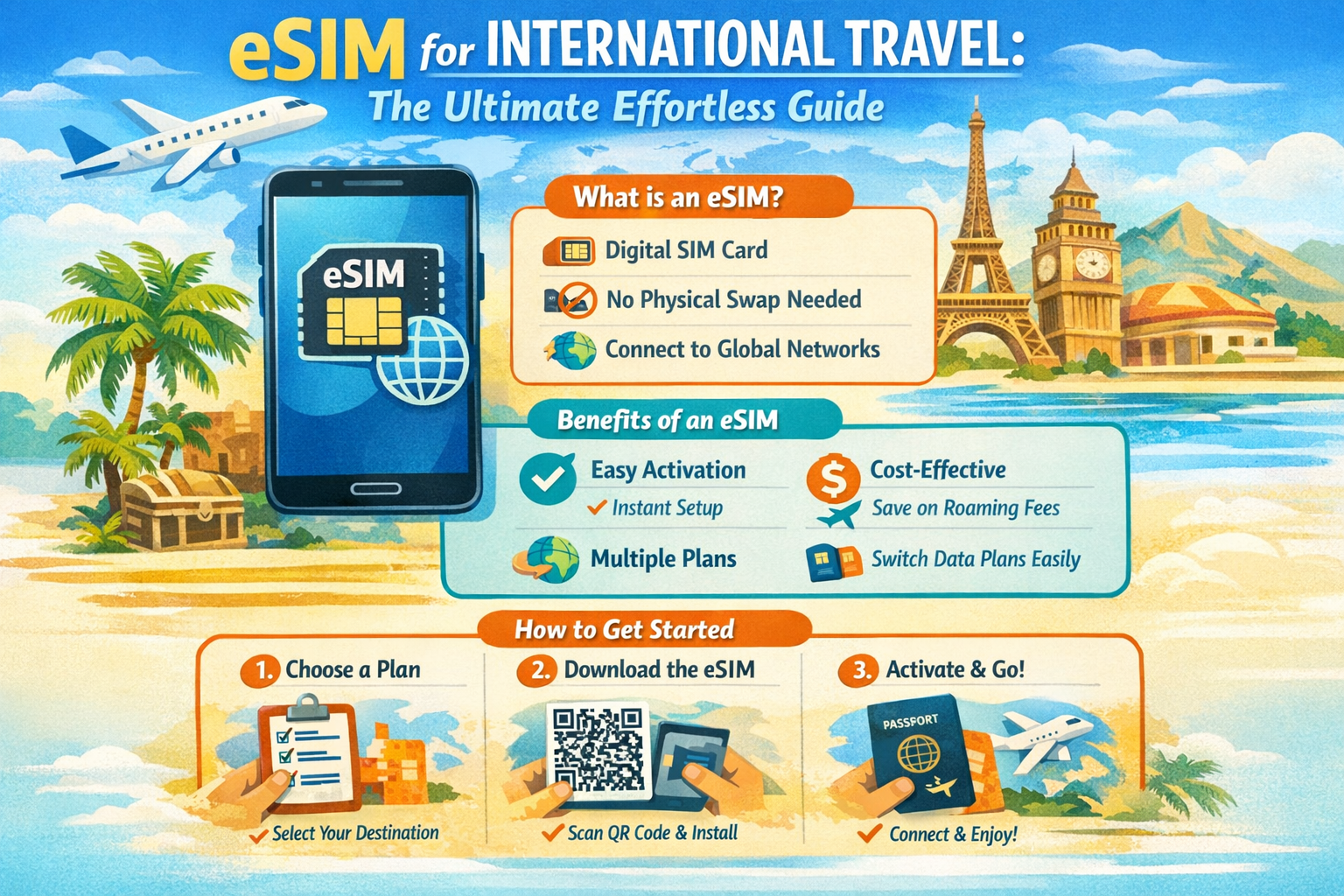
In today’s increasingly connected world, staying online while traveling abroad has become essential for both leisure and business travelers. eSIM for international travel is revolutionizing the way globetrotters stay connected without the hassle of physical SIM cards. This innovative technology allows seamless connectivity across borders, providing flexibility, convenience, and often, significant cost savings.
If you’re planning an international trip and want to avoid the frustration of changing SIM cards, exorbitant roaming charges, or relying solely on Wi-Fi, this comprehensive guide will provide you with everything you need to know about using eSIMs for international travel. From understanding what an eSIM is to choosing the right provider and activating your eSIM on the go, this article covers it all.
—
What is an eSIM and How Does It Work?
An eSIM, or embedded SIM, is a digital SIM card that is built into your device and allows you to activate a cellular plan without the need for a physical SIM card. Unlike traditional SIM cards, which are physical chips you insert into your phone, the eSIM is embedded inside smartphones, tablets, laptops, and even some wearables.
To use an eSIM, you simply download a digital profile from a carrier or eSIM provider, which is stored on your device. This profile enables connectivity just like a traditional SIM card, but with far more convenience and flexibility.
Key Features of eSIMs:
– Multiple profiles: Store several carrier plans and switch between them easily.
– Remote provisioning: Activate cellular plans digitally without visiting a store.
– No physical SIM needed: Ideal for devices that don’t have SIM card slots or for those who dislike changing SIM cards frequently.
– Global compatibility: Many carriers worldwide support eSIM technology, making it ideal for international travel.
—
Why Choose eSIM for International Travel?
Traveling internationally often means dealing with various issues related to connectivity — high roaming fees, finding reliable local SIM cards, and ensuring your device supports foreign networks. Using an eSIM can eliminate these challenges.
Benefits of Using eSIM When Traveling Abroad
1. Cost Savings on Roaming Fees:
Traditional roaming charges can be exorbitant. Many international eSIM plans offer competitive rates that significantly reduce data costs, helping you stay connected without worrying about expensive bills back home.
2. Convenience and Flexibility:
No need to hunt for local SIM cards at the airport or local stores. You can purchase an eSIM plan online and activate it instantly, even before you reach your destination.
3. Avoid Losing or Damaging SIM Cards:
Physical SIM cards are small and easy to misplace. eSIM eliminates this risk since everything is managed digitally.
4. Multi-Country Coverage:
Many international eSIM providers offer plans valid across multiple countries or regions, ideal for travelers visiting multiple destinations.
5. Dual SIM Functionality:
Most modern smartphones that support eSIM allow dual SIM usage, meaning you can keep your home SIM active while using an international eSIM for local data and calls.
—
How to Get Started with eSIM for International Travel
Check Device Compatibility
Not all devices support eSIM technology yet, so the first step is to confirm if your smartphone or gadget has eSIM capability. Most recent models from leading brands like Apple (iPhone XS and later), Samsung (Galaxy S20 and later), Google Pixel (Pixel 3 and later), and others support eSIM.
To check:
– Visit the specifications page of your device on the manufacturer’s website.
– Look in your device’s settings under cellular or mobile network options for an “Add Cellular Plan” or “Add eSIM” prompt.
Choose the Right eSIM Provider for Your Travel Needs
There are two general categories of eSIM providers for international travelers:
1. Mobile Network Operators (MNOs): Traditional carriers offering eSIM plans (e.g., AT&T, Vodafone, Orange).
2. Independent eSIM Providers: Digital-first companies specializing in global and regional travel data plans (e.g., Commbitz).
Each provider offers different pricing models, data packages, and coverage areas, so research is key.
—
How to Purchase and Activate an eSIM Plan
Once you’ve confirmed your device supports eSIM and selected a provider, the activation process is straightforward.
Step 1: Purchase Your eSIM Plan Online
Most eSIM providers have websites or apps where you can buy data plans tailored for specific countries or regions. You will usually need to provide your device type, travel dates, and preferred data package.
Step 2: Receive Your eSIM Activation Details
After purchase, you will get an activation code, typically in the form of a QR code. This QR code contains your eSIM profile.
Step 3: Install the eSIM Profile on Your Device
Open your device’s cellular settings to add a new mobile plan:
– On iPhone: Go to Settings > Cellular > Add Cellular Plan, then scan the QR code.
– On Android: Steps vary depending on manufacturer, but typically go to Settings > Network & Internet > Mobile Network > Advanced > Carrier > Add carrier.
Follow the on-screen instructions, and the new plan will be installed.
Step 4: Activate and Use Your eSIM Plan
Once installed, make sure the new eSIM plan is selected for data usage. Some devices let you label the plan (e.g., “Travel eSIM”) and choose whether it’s used for calls, data, or texts.
—
Tips for Using eSIMs Efficiently While Traveling
To make the most of your eSIM for international travel, keep the following tips in mind:
Use Wi-Fi Calling and Messaging When Possible
Even with an international data plan, costs can add up with calls and texts. Take advantage of Wi-Fi calling and messaging apps like WhatsApp, Skype, or FaceTime over Wi-Fi to reduce data consumption and charges.
Monitor Data Usage Closely
Data can be expensive and limited on travel plans, so monitor your consumption using built-in device tools or carrier apps. Set data limits or alerts to avoid unexpected overages.
Have a Backup Connectivity Plan
While eSIMs are reliable, it’s a good idea to have backup solutions in case coverage is spotty—such as portable Wi-Fi hotspots, local SIM cards, or roaming plans from your home carrier.
Update Your Device Before Traveling
Ensure your phone’s software is updated with the latest version to support new eSIM functions and improve network compatibility.
—
Which Devices Support eSIM for International Travel?
Knowing if your device supports eSIM is pivotal. Below is a list of popular phones and gadgets that generally support eSIM technology as of 2024:
– Apple iPhones: iPhone XS, XS Max, XR, 11 series, 12 series, 13 series, 14 series, and later.
– Samsung Galaxy: S20, S21, S22, S23 series, Z Fold3/4, Z Flip3/4.
– Google Pixel: Pixel 3a, Pixel 4, Pixel 5, Pixel 6, Pixel 7 series.
– Tablets: iPad Pro (2018 and later), iPad Air (3rd gen and later), Samsung Galaxy Tab S7 and later.
– Laptops: Some Windows laptops and tablets with eSIM support.
Always double-check your specific model’s eSIM compatibility and carrier support in your destination countries.
—
Potential Challenges and How to Overcome Them
While eSIM technology offers many benefits, there are a few challenges to keep in mind:
Limited Carrier Support in Some Countries
Not all carriers worldwide support eSIM, especially in less developed regions. Research your destination in advance and consider alternative options like local SIM cards.
Device Lock or Carrier Restrictions
Some devices locked to specific carriers may disable eSIM functionality or limit installing profiles from non-affiliated carriers. If you travel often, it’s worth unlocking your device for full flexibility.
Compatibility Issues With Older Devices
Older phones and models may not support eSIM at all. If you don’t have an eSIM-compatible device, consider carrying a secondary phone that supports eSIM or sticking with physical SIM cards.
—
Comparing Top eSIM Providers for International Travel
When it comes to selecting an eSIM plan, several providers stand out in terms of coverage, pricing, and user-friendliness:
Airalo
– Covers over 190 countries.
– Offers regional and global data plans.
– Competitive pricing.
– Easy-to-use app for purchasing and activation.
Truphone
– Strong presence in Europe, Asia, and the Americas.
– Good for business and frequent travelers.
– Flexible plans with data rollover options.
GigSky
– Wide country coverage.
– Supports data-only and voice data plans.
– Available on multiple platforms.
Local Carrier eSIMs
Some local carriers offer eSIM plans tailor-made for their region, often at lower rates than international providers.
—
The Future of eSIM in Global Travel
As eSIM technology becomes standard in more devices and more carriers adopt it, international travel will become less complicated regarding mobile connectivity. Expect innovations such as:
– Automatic network switching for uninterrupted service.
– Improved eSIM security features for better user protection.
– Integrated eSIM management directly from travel apps and ecosystems.
– More widespread adoption in affordable devices, making it accessible to all travelers.
—
Conclusion
Utilizing an eSIM for international travel can simplify your connectivity needs, save money, and give you the freedom to stay connected around the world without the usual headaches. By understanding what an eSIM is, checking device compatibility, choosing the right provider, and knowing how to activate the eSIM profile, you can make your international trips more enjoyable and hassle-free.
As the world moves towards digital and seamless connectivity, embracing eSIM technology is one of the smartest steps an international traveler can take. So the next time you pack your bags, consider leaving your physical SIM cards at home and step into the effortless connectivity world with eSIM.
—
Start your journey with confidence and stay connected globally with ease — your ultimate eSIM adventure awaits!