
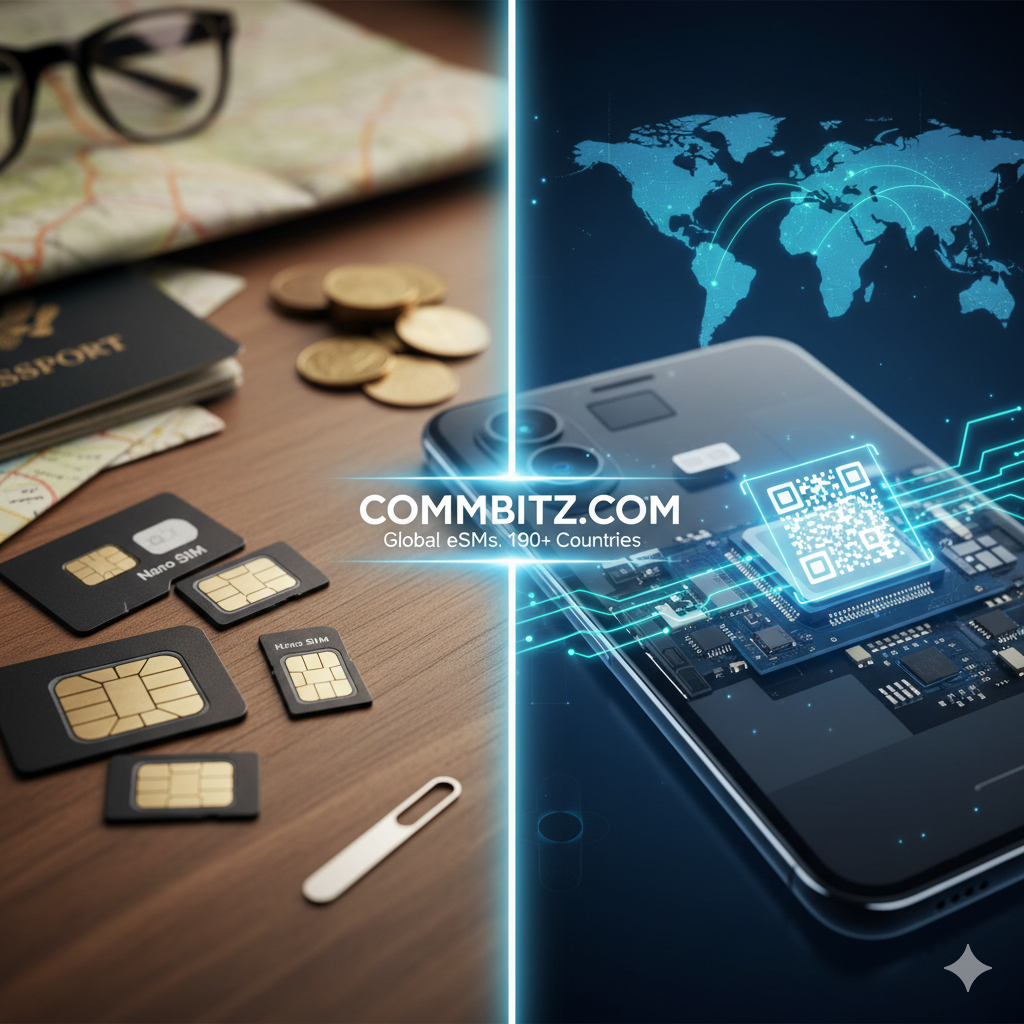
The way we connect to the world is constantly evolving, and nowhere is this more apparent than in the technology that powers our mobile devices. For decades, the Physical SIM card was the undisputed king—a tiny, removable plastic chip linking your phone to your carrier. Today, it has a powerful rival: the eSIM, or embedded Subscriber Identity Module.
This comprehensive guide breaks down the core differences, advantages, and disadvantages of both to help you decide which technology is right for your digital life, especially if you’re a global traveler.
What are SIM Cards? The Fundamentals
Before comparing the two, it’s essential to understand their purpose. Both a physical SIM and an eSIM are Subscriber Identity Modules. Their primary function is to securely store the information needed to authenticate your identity to a mobile network. This includes your IMSI (International Mobile Subscriber Identity) and other security keys, which allow you to make calls, send texts, and use mobile data.
📱 Physical SIM Card: The Traditional Choice
The physical SIM card is the traditional, removable plastic card that must be inserted into a device’s SIM tray. Over the years, it has shrunk dramatically, from the credit-card-sized original to the current standard, the tiny Nano-SIM.
💡 eSIM: The Embedded Revolution
The “e” in eSIM stands for “embedded.” This is a small chip that is permanently soldered directly onto your device’s motherboard during manufacturing. It is not a removable card. Instead of swapping physical plastic, an eSIM is activated and reprogrammed digitally through software—often by scanning a QR code or using a carrier’s app.
🆚 eSIM vs. Physical SIM: Key Differences at a Glance
| Feature | Physical SIM | eSIM (Embedded SIM) |
| Form Factor | Small, removable plastic card (Nano-SIM is current standard) | A tiny chip permanently embedded in the device hardware |
| Activation | Requires manual insertion into a SIM tray | Digital activation via QR code, carrier app, or remote provisioning |
| Portability | Easily removed and transferred between devices | Transfer process is digital and usually requires carrier assistance or specific OS features (e.g., iPhone Quick Transfer) |
| Multiple Profiles | Supports only one active profile at a time (Dual-SIM devices use two physical slots or one physical + one eSIM) | Can store multiple profiles (up to 5 or more), allowing users to switch between them easily |
| Space Usage | Requires a physical SIM tray and slot (a vulnerable ingress point) | Requires no physical tray, freeing up internal device space for other components (like a larger battery) |
| Environmental Impact | Contributes to plastic and electronic waste | Significantly reduces plastic waste and shipping logistics |
✅ Advantages of the eSIM
The shift towards eSIM technology is driven by several compelling advantages, particularly for modern, connected lifestyles and international travel.
1. Unmatched Convenience and Flexibility
- Instant Activation: Say goodbye to visiting a store or waiting for a physical card to be mailed. eSIMs can be activated almost instantly by downloading a profile over Wi-Fi, often taking just a few minutes.
- Seamless Dual-SIM Functionality: Most modern eSIM-compatible phones allow you to use both a physical SIM (for your home number) and one or more eSIMs simultaneously. This is perfect for separating work and personal life or, more commonly, for international travel.
2. The Traveler’s Game-Changer ✈️
For anyone who frequently crosses borders, the eSIM is revolutionary. Instead of searching for a local SIM card vendor at the airport, you can purchase an international data plan online, activate it before you even land, and stay connected the moment your plane touches down.
This is where providers like Commbitz.com shine. They provide the best eSIM across 190+ countries, offering seamless, affordable, and instant connectivity, eliminating exorbitant roaming charges and the hassle of physical SIM swapping. This vast global reach is ideal for both business travelers and digital nomads.
3. Enhanced Security
Because the eSIM is embedded and cannot be physically removed, it offers better security.
- Anti-Theft: A thief cannot simply pop out the SIM card to disable tracking features like ‘Find My Phone,’ making it easier to recover lost or stolen devices.
- Reduced SIM Swap Attacks: The digital provisioning process for eSIMs, while not impervious, is often backed by stronger, more traceable security protocols than traditional SIM card issuance.
4. Device Innovation and Sustainability
- Space Saving: Eliminating the SIM tray allows manufacturers to create smaller, sleeker devices, increase battery capacity, or improve water resistance by reducing internal entry points.
- Eco-Friendly: By removing the need for millions of plastic cards and associated packaging and shipping, eSIM technology is an undeniably more sustainable, eco-friendly choice.
❌ Disadvantages of the eSIM
While the future is digital, eSIM technology still has some drawbacks compared to its physical counterpart.
1. Limited Device Compatibility
eSIM technology is primarily limited to newer, flagship smartphones, tablets, and smartwatches. Older or budget-friendly devices often lack the necessary embedded chip, making the physical SIM the only option for a large segment of the global population.
2. Device Switching Complexity
The major downside for many users is the difficulty of switching devices.
- Physical SIM: If your phone breaks, you can simply remove the plastic card and insert it into an old backup phone to restore service instantly.
- eSIM: The process of moving an eSIM profile is entirely digital and often requires a stable Wi-Fi connection and direct carrier support. If your device is completely broken or out of battery, you can’t access or transfer your service immediately, which can be a significant inconvenience in an emergency.
🛠️ Advantages and Disadvantages of the Physical SIM
Despite the rise of eSIMs, the physical SIM remains relevant, offering benefits where digital technology falls short.25
➕ Physical SIM Advantages
- Universal Compatibility: Physical SIM cards work with virtually every mobile phone ever made, ensuring near-universal access to a mobile network.
- Easy Device Switching: Its physical nature makes swapping devices quick and intuitive. If your primary phone fails, moving your number to a backup phone takes seconds with a simple SIM ejector tool.
- Wider Carrier Support: In some regions, particularly for prepaid or smaller regional carriers, the physical SIM is still the only available option.
➖ Physical SIM Disadvantages
- Inconvenience: The need to physically handle and store tiny cards when traveling or switching carriers is cumbersome and prone to loss.
- Security Risk: The card can be easily removed by a thief to disable tracking or transferred to another device for unauthorized use.
- Plastic Waste: Every new plan or carrier switch results in the manufacture and eventual disposal of another plastic card, adding to electronic waste.
🧑💻 Who Should Choose Which?
The best choice depends entirely on your lifestyle, device, and priorities.
Choose an eSIM if you are:
- A Frequent International Traveler: The ability to instantly activate a regional plan from a provider like Commbitz.com upon landing is invaluable. You can maintain your home line active for critical calls/texts while using the eSIM for affordable data.
- A Tech-Savvy User with a Modern Device: If you own an iPhone XS (or newer), Google Pixel 4 (or newer), or a recent Samsung Galaxy device, you’re equipped to take full advantage of the convenience.
- Seeking Dual-Line Functionality: Perfect for maintaining a professional and personal line on a single device.
- Environmentally Conscious: Reducing plastic consumption aligns with a sustainable lifestyle.
Choose a Physical SIM if you are:
- Using an Older or Budget Device: Compatibility remains the physical SIM’s greatest strength.
- A Frequent Device Swapper: If you routinely switch your primary number between multiple phones, the physical card is currently the easier way to manage service transfer.
- In a Region with Limited eSIM Support: While global adoption is high, some local carriers in specific regions may not yet support eSIM provisioning.
🌐 The Future is Global: eSIM for Travel
For most modern users, especially those with an international focus, the eSIM is the clear winner.36 The hassle-free activation and the ability to maintain multiple profiles simultaneously are transforming the global travel experience.
As technology continues to mature, and new carriers adopt the standard, the few remaining disadvantages of the eSIM—namely, device transfer complexity—will likely be addressed with better digital tools. The movement towards a completely digital, embedded connectivity model is not a trend; it’s the inevitable future.
Ready to explore a simpler, smarter way to connect globally? Check out the plans available on Commbitz.com to get affordable and reliable eSIM data in over 190+ countries today.
eSIM Phone Compatibility List or Commbitz International Plans GSMA – About eSIM for technical context on the global standard.