
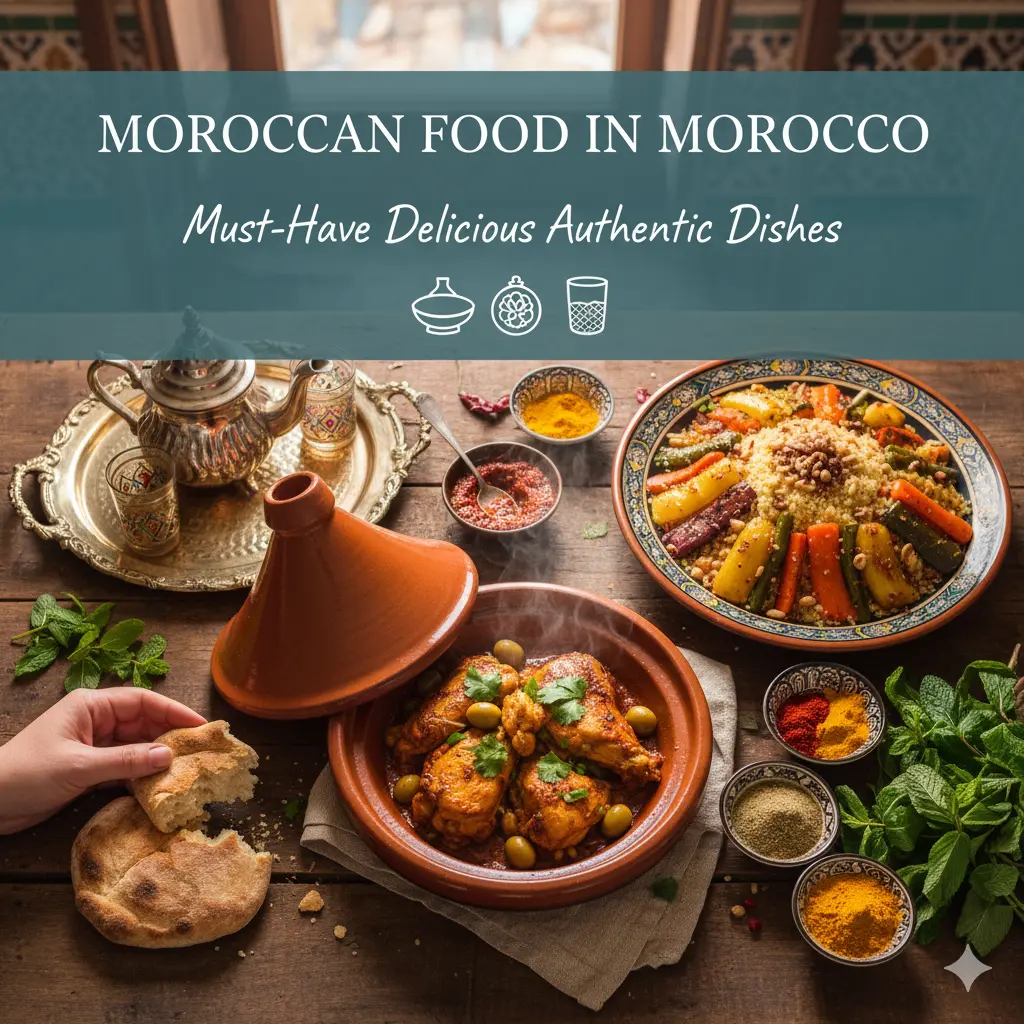
Moroccan Food in Morocco: Must-Have Delicious Authentic Dishes
Moroccan food in Morocco offers a vibrant and tantalizing culinary experience unlike any other. Deeply rooted in a blend of Arab, Berber, Mediterranean, and African influences, Morocco’s gastronomy is a rich tapestry of bold spices, fresh ingredients, and traditional cooking methods that have been perfected over centuries. Exploring Moroccan cuisine while visiting the country is a journey through history and culture, a celebration of flavors that is as colorful as the souks and landscapes themselves.
Exploring the Essence of Moroccan Food in Morocco
When you dive into Moroccan food in Morocco, you will quickly discover that every dish tells a story. The use of spices like cumin, coriander, saffron, cinnamon, and paprika is essential, giving each meal a distinctive aromatic profile. Moroccan food is known for its balance of sweet and savory, often combining fruits like apricots or raisins with meats, and including signature ingredients like preserved lemons and olives.
Tagine: A Symbol of Moroccan Culinary Tradition
No exploration of Moroccan food would be complete without tasting a traditional tagine. Named after the earthenware pot in which it is cooked, tagine is a slow-cooked stew that can feature lamb, chicken, beef, or fish, combined with vegetables, dried fruits, and sometimes nuts. The slow cooking method ensures the meat becomes tender and absorbs the complex flavors of the spices and ingredients.
For an authentic experience, try a chicken tagine with preserved lemons and green olives, or a lamb tagine with prunes and almonds. These dishes are typically served with freshly baked khobz (Moroccan bread), ideal for soaking up the savory sauce.
Couscous: Morocco’s Iconic Staple Dish
Couscous is another essential Moroccan dish that you must try when visiting. Made from steamed semolina grains, couscous is often served with a rich meat or vegetable stew ladled on top. Traditionally prepared on Fridays for family gatherings, it represents hospitality and communal dining.
Vegetable couscous with carrots, zucchini, chickpeas, and a hint of turmeric or saffron is a delightful vegetarian option. The dish’s fluffy texture combined with aromatic spices makes it beloved by both locals and travelers alike.
Harira: The Flavors of Moroccan Hospitality
Harira is a beloved Moroccan soup, especially popular during the holy month of Ramadan when it breaks the fast. This hearty and nutritious soup typically contains tomatoes, lentils, chickpeas, rice or vermicelli, and tender chunks of lamb or beef. It’s seasoned with ginger, cinnamon, and fresh herbs like cilantro and parsley.
Harira is often accompanied by dates and traditional chebakia pastries—deep-fried dough coated in honey and sesame seeds. This combination highlights Morocco’s approach to balancing flavors and textures in its meals.
Pastilla: A Sweet and Savory Delight
One of the most unique dishes in Moroccan cuisine is pastilla, a savory pie that beautifully marries sweet and savory ingredients. Traditionally filled with pigeon or chicken mixed with almonds, eggs, and cinnamon, it’s wrapped in thin layers of warqa pastry and dusted with powdered sugar and cinnamon on top.
Pastilla perfectly encapsulates Moroccan food’s love for contrasting tastes and is frequently served at special occasions and celebrations.
Moroccan Street Food: A Burst of Flavor on the Go
While traditional dishes are a must-try, Moroccan street food also offers an exciting culinary adventure. From spicy merguez sausages grilled on open flames to freshly fried msemen (flaky flatbreads) served with honey or stuffed with savory fillings, the street vendors deliver some of the most authentic and accessible flavors.
Make sure to taste the refreshing orange juice or the mint tea, Morocco’s national drink, which perfectly complements the spices in the food and is a symbol of Moroccan hospitality.
Desserts and Sweets: A Sweet Finish to Your Meal
Moroccan desserts are often made with nuts, honey, and orange blossom water. In addition to chebakia, you might want to try almond briouats (pastries filled with almond paste and fried), or sellou, a toasted mixture of flour, almonds, sesame seeds, and honey, which is especially popular during festive seasons.
Conclusion
To truly appreciate Moroccan food in Morocco is to delve into a culinary world that reflects the country’s rich heritage and culture. From the slow-cooked tagines to the fragrant bowls of harira soup and the unique pastilla, each dish invites you to savor layers of flavor crafted over generations. Whether you’re dining in a riad, tasting street food, or enjoying a meal in a vibrant market, Moroccan cuisine offers an unforgettable, delicious journey that mirrors the warmth and diversity of the country itself.