
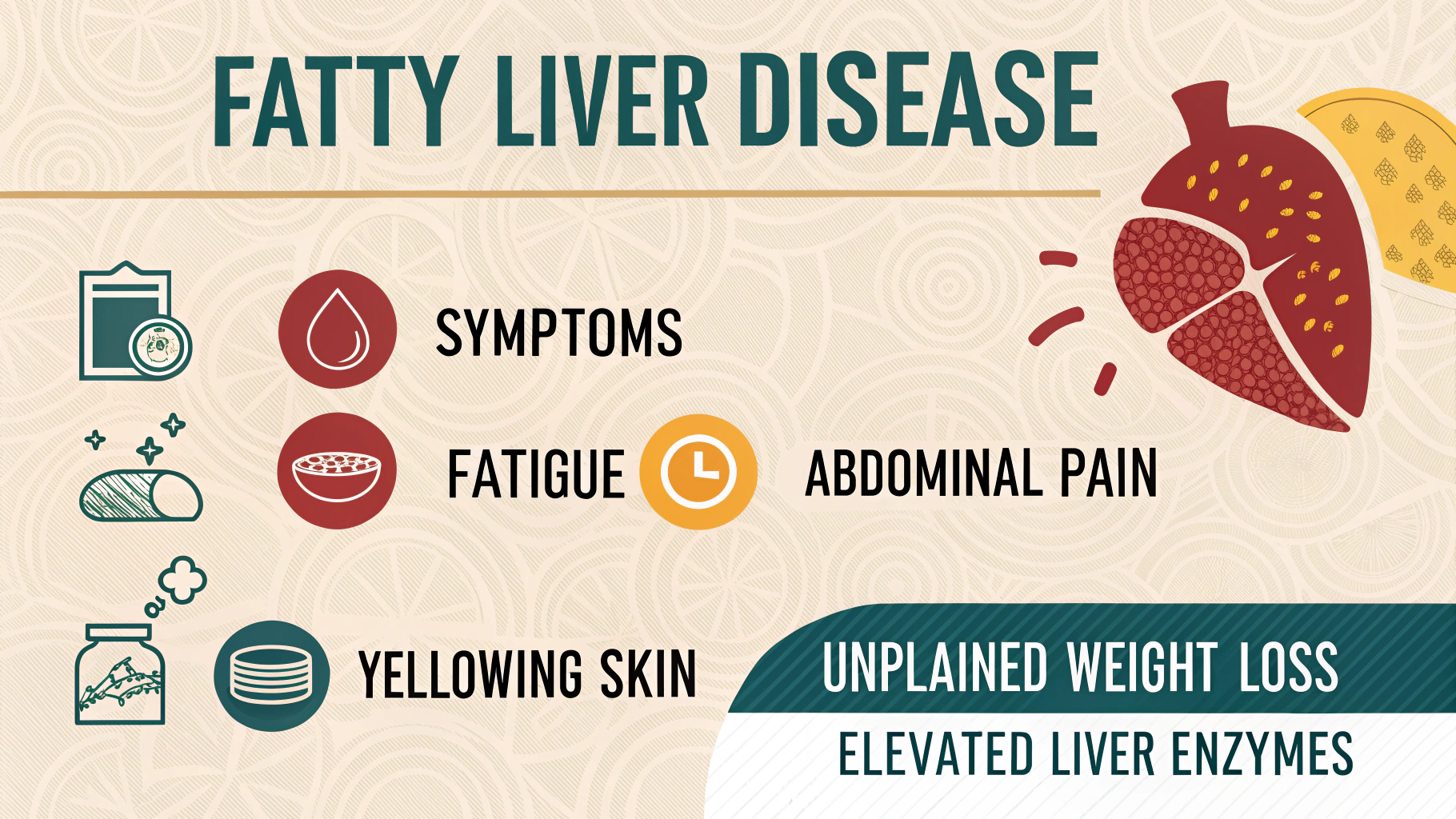
Fatty liver disease is one of the most common liver conditions affecting people today, often linked to unhealthy diet, obesity, or excessive alcohol consumption. It occurs when too much fat builds up in the liver cells, leading to inflammation and, in some cases, liver damage. Understanding the early symptoms can help in timely diagnosis and treatment before the condition becomes severe.
1. Common Symptoms of Fatty Liver Disease
In the early stages, fatty liver disease often shows no obvious symptoms, making it difficult to detect without medical tests. However, as the condition progresses, certain signs begin to appear, such as:
- Fatigue and Weakness: Persistent tiredness is one of the most common complaints, caused by the liver’s reduced ability to process toxins and nutrients.
- Discomfort in the Upper Right Abdomen: A dull or mild pain in the upper right side of the stomach may indicate liver inflammation.
- Unexplained Weight Loss: Some people experience unintended weight loss due to poor liver function.
- Loss of Appetite and Nausea: A reduced desire to eat or feeling nauseous can develop as the liver struggles to perform properly.
- Swelling (Edema): Fluid buildup in the abdomen or legs can occur in advanced stages of fatty liver disease.
- Yellowing of Skin or Eyes (Jaundice): This occurs when the liver cannot process bilirubin efficiently, a sign of more serious liver involvement.
2. Types of Fatty Liver Disease
There are two main types:
- Non-Alcoholic Fatty Liver Disease (NAFLD): Caused by factors such as obesity, diabetes, or high cholesterol, and not related to alcohol consumption.
- Alcoholic Fatty Liver Disease (AFLD): Caused by heavy and prolonged alcohol use, which damages liver cells and promotes fat accumulation.
3. When to See a Doctor
If you notice persistent fatigue, abdominal discomfort, or other liver-related symptoms, it’s essential to consult a liver specialist. Early intervention can prevent progression to more severe conditions such as liver cirrhosis or failure.
For expert diagnosis and treatment, visiting the best doctor for liver in noida can make a significant difference. Specialists use advanced imaging tests, blood work, and lifestyle guidance to help reverse or manage fatty liver effectively.
4. Preventive Tips
- Maintain a healthy weight through regular exercise and a balanced diet.
- Limit sugar and refined carbohydrate intake.
- Avoid excessive alcohol consumption.
- Get regular liver checkups, especially if you have diabetes or high cholesterol.
- Include antioxidant-rich foods like fruits, green vegetables, and whole grains.
Conclusion
Fatty liver disease often develops silently, but with awareness and proactive health care, it can be managed or even reversed. If you’re experiencing symptoms or are at risk, don’t delay medical consultation. Book an appointment with the best liver specialist in Noida to ensure your liver stays healthy and functional for years to come.