
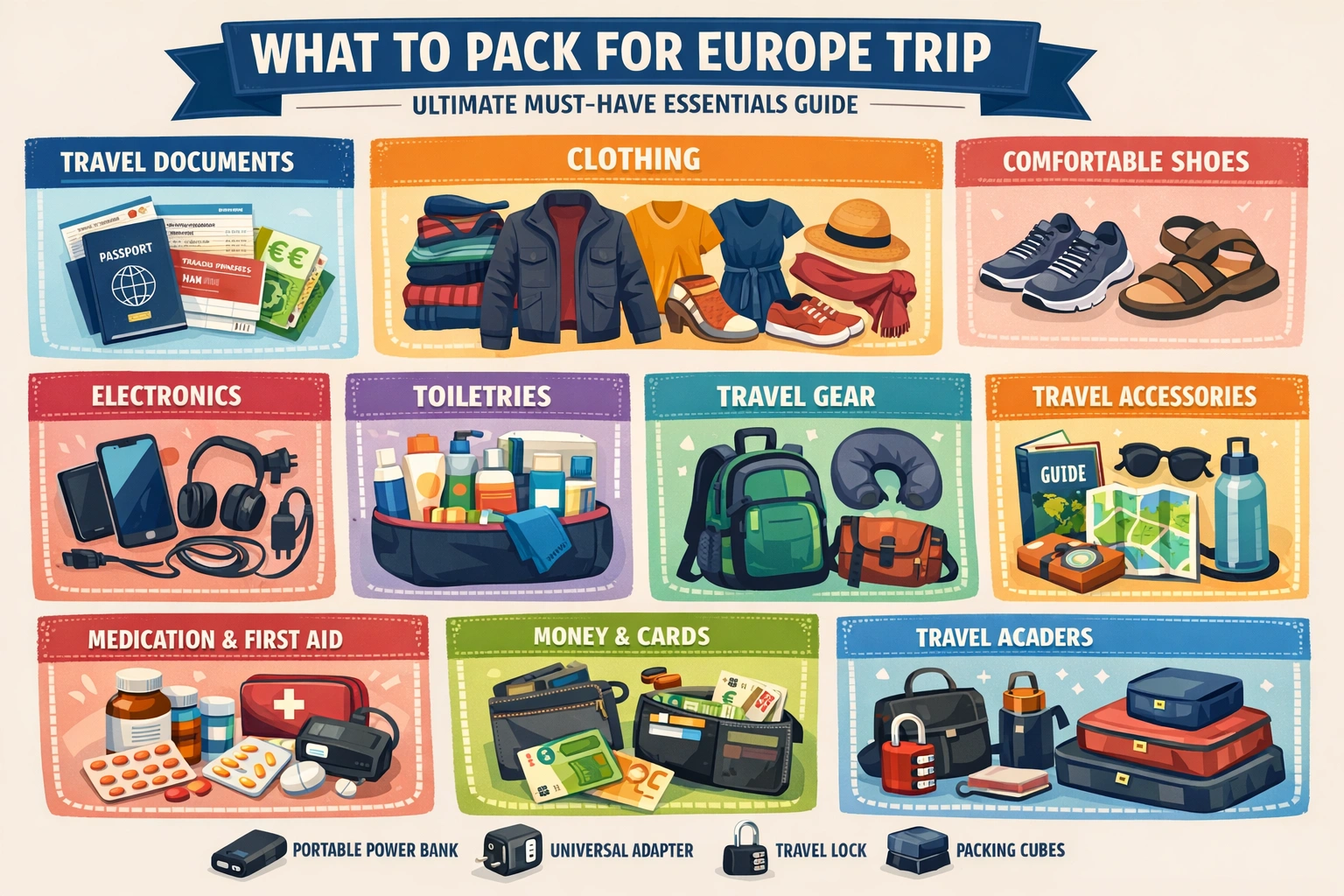
Embarking on a European adventure requires more than just a valid passport and a sense of wanderlust—it demands careful preparation, especially when it comes to packing. Knowing what to bring along can mean the difference between a smooth, enjoyable trip and a stressful, luggage-filled ordeal. Whether you’re heading to the bustling streets of Paris, the historic alleys of Rome, or the scenic fjords of Norway, having the right essentials will keep you comfortable, organized, and ready for any situation.
In this ultimate must-have essentials guide, we’ll walk you through everything you need to consider packing for your European journey, ensuring you’re fully equipped to make the most of your travels.
Start with Versatile Clothing
Europe’s climate can vary widely depending on the season and countries you’re visiting, so packing versatile clothing is key. Light layers work best because you can adjust your outfit easily as the temperature changes throughout the day.
Layering is Key
Bring breathable base layers such as cotton or moisture-wicking shirts, a warm mid-layer like a fleece or light sweater, and a waterproof outer layer for unpredictable weather. Packing scarves, hats, and gloves during colder months is essential, while in summer, don’t forget sunglasses and sun hats for added sun protection.
Shoes Matter More Than You Think
Europe’s cobblestone streets and extensive walking opportunities call for comfortable, sturdy footwear. Choose one pair of well-broken-in walking shoes and a pair of slightly dressier shoes for evenings or special outings. Avoid new shoes that can cause blisters.
Travel Documents and Money Essentials
Your documents are your lifeline abroad, so having them organized and accessible is critical.
Keep Your Documents Safe and Accessible
Make sure to carry a valid passport, visa (if required), travel insurance info, flight and accommodation confirmations, and emergency contacts. Use a travel wallet or neck pouch to keep these documents safe but within reach.
Money Matters
Europe largely accepts credit and debit cards, but it’s wise to carry some local cash for small vendors, metro rides, or tips. Keep cards and cash in separate places to reduce risk if you lose a wallet.
Tech Gear for a Connected Trip
Staying connected can enhance your travel experience, whether for navigation, translation, or sharing memories.
Essential Electronics
Pack a universal power adapter suitable for European outlets as plugs vary from country to country. Don’t forget your phone, charger, headphones, and possibly a portable power bank for long sightseeing days. A compact camera or smartphone with a good camera can capture your memories beautifully.
Apps and Offline Access
Download useful travel apps before you leave, including maps, language translation, and local transport apps. Save offline versions of important information like maps and itineraries in case you lose Wi-Fi access.
Toiletries and Health Essentials
Europe has pharmacies in every city, but packing certain personal health items will keep you comfortable and prepared.
Toiletries to Pack
Bring travel-size toiletries like shampoo, conditioner, toothpaste, and deodorant. Consider solid toiletries such as shampoo bars to save space and comply with airline liquid restrictions. Include a small first aid kit with plasters, pain relievers, allergy medication, and any prescription medications.
Covid-19 Precautions
Depending on guidelines, you might also want to carry face masks, hand sanitizer, and disinfectant wipes, especially when using public transport or visiting crowded places.
Pack for Convenience and Safety
Smart packing also means thinking about day-to-day convenience and safety while exploring.
Daypack or Foldable Bag
A lightweight daypack is indispensable for carrying your water, souvenir shopping, camera, and other daily needs. If you anticipate buying souvenirs or extra gear, a foldable travel bag can be a lifesaver for added luggage space on your return.
Security Items
Consider bringing a money belt or neck pouch to deter pickpockets, particularly in tourist hotspots. RFID-blocking sleeves can protect your credit cards from unauthorized scans.
Extra Tips for Efficient Packing
– Use packing cubes: They help keep your suitcase organized and maximize space.
– Roll clothes instead of folding: Rolling minimizes wrinkles and saves space.
– Limit heavy items: Avoid packing heavy books or bulky souvenirs; rely on digital versions where possible.
– Check baggage limits: Adhere strictly to airline weight and size restrictions to avoid extra fees.
Conclusion
Proper packing sets the foundation for an enjoyable and stress-free trip across Europe. By thoughtfully selecting versatile clothing, organizing essential documents and money, bringing the right tech gear, and preparing for health and safety needs, you’ll be ready to embrace every moment of your journey. Remember that flexibility and preparation go hand in hand—pack smart and travel light to make the most out of your European adventure!
Master the art of packing light without leaving the essentials behind—from the perfect walking shoes to the digital connectivity that keeps you navigating Europe like a local.”